
D60 Divisional Chart: The Shashtiamsha and its Importance
4/17/20269 min read
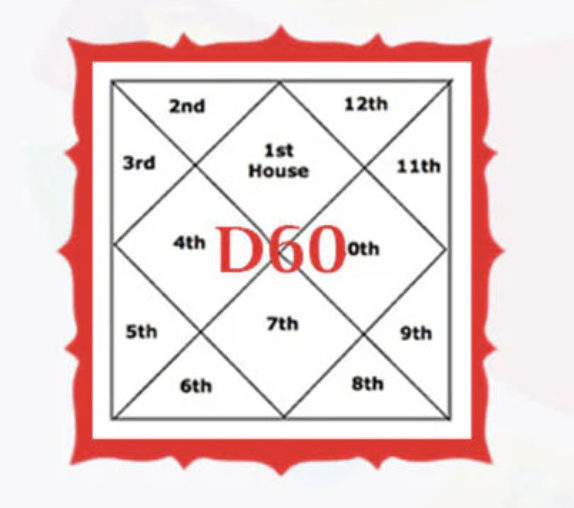
The architectural complexity of Vedic astrology, or Jyotisha, is nowhere more evident than in the system of divisional charts known as the Shodashavarga. Among these sixteen primary divisions, the Shashtiamsha (D60) stands as the ultimate arbiter of a planet's true capacity and the most profound indicator of an individual's accumulated karma. As articulated by Maharishi Parashara in the foundational text Brihat Parashara Hora Shastra (BPHS), the Shashtiamsha is considered "supreme" among all divisional charts, possessing a weightage in quantitative strength assessments (Vimshopaka Bala) that exceeds even the Rashi (D1) and Navamsha (D9) charts combined. While the Rashi chart represents the gross physical manifestation of existence and the Navamsha reveals the inner mental and dharmic inclinations, the Shashtiamsha serves as the microcosm of the soul's script, holding the "karmic DNA" that determines the final outcome of planetary dashas and life events.
The Ontological Foundations of the Sixtieth Division
The term "Shashtiamsha" is derived from the Sanskrit roots Shashti, meaning sixty, and Amsha, meaning portion or division. This chart operates by dividing each 30-degree zodiacal sign into sixty equal segments, each spanning precisely 30 minutes of arc, or 0.5 degrees. The primary significance of this division lies in its ability to penetrate the layers of Sanchita Karma—the vast reservoir of accumulated deeds from all previous incarnations. If the birth chart is understood as the body and the Navamsha as the inner mind, the Shashtiamsha is the record of the soul’s journey, explaining why specific events occur despite favorable or unfavorable indicators in the broader charts.
In the cosmological framework of Jyotisha, the number sixty represents a "cycle-completer" in the earth-pulse base-12 system, reflecting a full rotation of spiritual development. The D60 is functionally a microscope applied to the 12th house themes of the Rashi chart. Because $12 \times 5 = 60$, the Shashtiamsha provides a detailed view of the 12th-angle significations, including closure, finality, dissolution of material identity, and the astral experiences that occur between physical births. It reveals the "dream state" of the planets, showing how they behave when the consciousness is active in the astral realms during sleep or in the transitions of death.
Mathematical Framework and Birth Time Sensitivity
The mathematical derivation of the Shashtiamsha chart necessitates an extraordinary level of precision in birth time data. Because each 0.5-degree division corresponds to approximately two minutes of time in the ascending sign (Lagna), a minor error in birth time can result in an entirely different D60 chart. This sensitivity makes the D60 an indispensable tool for birth time rectification, where an astrologer adjusts the recorded birth time to align the D60 Lagna and its presiding deity with known life events.
To calculate the position of a planet in the Shashtiamsha, the Rashi position is initially ignored, and the specific degrees traversed within that Rashi are isolated. The standard formula provided in traditional texts like the Phala-deepika involves several steps:
Take the longitude of the planet within the Rashi (ignoring the Rashi number).
Multiply the degree and minute figure by 2.
Divide the resulting degree figure by 12.
Add 1 to the remainder.
The final result indicates the Rashi, counting from Aries, in which the Shashtiamsha falls.
Mathematically, this can be expressed through the following LaTeX formula:
$$\text{D60 Rashi} = \left( (\text{Longitude within Sign} \times 2) \pmod{12} \right) + 1$$
Vimshopaka Bala: The Quantified Weight of Past Karma
The Shashtiamsha’s importance is quantitatively validated through the Vimshopaka Bala system, a 20-point scale used to determine the auspiciousness of planetary placements across multiple divisional charts. This system assigns a "Swa Vishwa" (weighted point) to each divisional chart based on its importance in different schemes.
Divisional ChartShad-Varga (6)Sapta-Varga (7)Dasa-Varga (10)Shodasha-Varga (16)Rashi (D1)6.05.03.03.5Hora (D2)2.02.01.51.0Drekkana (D3)4.03.01.51.0Chaturthamsha (D4)---0.5Saptamsha (D7)-1.01.50.5Navamsha (D9)5.02.51.53.0Dashamsha (D10)--1.50.5Dvadashamsha (D12)2.04.51.50.5Shodashamsha (D16)--1.52.0Vimshamsha (D20)---0.5Chaturvimshamsha (D24)---0.5Saptavimshamsha (D27)---0.5Trimshamsha (D30)1.02.01.51.0Khavedamsha (D40)---0.5Akshavedamsha (D45)---0.5Shashtiamsha (D60)--5.04.0
In the Dasa-Varga scheme, which is widely utilized for natal horoscopy, the Shashtiamsha is assigned 5.0 points—the highest of any single chart. Even in the full Shodasha-Varga scheme used for royal or highly complex charts, it maintains 4.0 points. This disproportionate weightage signifies that the karma represented by the D60 is the ultimate governor of a planet's ability to deliver results during its Dasha. A planet may be exalted in the Rashi chart, but if it is debilitated or in a malefic Shashtiamsha amsha, its Vimshopaka score will drop, and the results during its planetary period may lead to a "riches to rags" story.
The Sixty Shashtiamsha Deities: A Typology of Results
The Shashtiamsha chart is unique in its association with sixty distinct deities, known as Amsha Devatas. Each deity carries a specific character that colors the planet falling into its division. These deities are divided into Saumya (benefic/gentle) and Krura (malefic/cruel) categories. For odd signs, the sequence follows the natural order from 1 to 60, while for even signs, the order is reversed.
Taxonomic List of Shashtiamsha Deities (Odd Rashi Order)
| No. | Shashtiamsa Name | Deity / Symbol | General Indication | Relevance in Interpretation |
| --- | ---------------- | -------------------- | ----------------------- | --------------------------------- |
| 1 | Ghora | Fierce form | Harsh, cruel tendencies | Indicates suffering or struggle |
| 2 | Rakshasa | Demon | Aggression, negativity | Karmic challenges, conflicts |
| 3 | Deva | Divine being | Virtue, blessings | Strong positive karma |
| 4 | Kubera | God of wealth | Prosperity | Financial gains, material success |
| 5 | Yaksha | Nature spirit | Hidden resources | Sudden gains or secrecy |
| 6 | Kinnara | Celestial musician | Creativity | Artistic talent |
| 7 | Bhrashta | Fallen | Corruption | Moral struggles |
| 8 | Kulaghna | Destroyer of lineage | Family issues | Break in traditions |
| 9 | Garala | Poison | Toxicity | Health or relationship issues |
| 10 | Vahni | Fire | Energy, transformation | Strong will, but volatile |
| 11 | Maya | Illusion | Deception | Confusion, unclear paths |
| 12 | Purisha | Impurity | Low tendencies | Challenges in conduct |
| 13 | Apampati | Water lord | Fluidity | Emotional depth |
| 14 | Marut | Wind god | Movement | Travel, instability |
| 15 | Kala | Time | Change, endings | Transformational phases |
| 16 | Sarpa | Serpent | Hidden fears | Sudden events |
| 17 | Amrita | Nectar | Blessings | Protection, good fortune |
| 18 | Indu | Moon | Calmness | Emotional balance |
| 19 | Mridu | Soft | Gentleness | Kind nature |
| 20 | Komala | Tender | Sensitivity | Artistic, emotional |
| 21 | Heramba | Form of Ganesha | Protection | Removal of obstacles |
| 22 | Brahma | Creator | Creation | Knowledge, wisdom |
| 23 | Vishnu | Preserver | Stability | Sustained success |
| 24 | Maheshwara | Shiva | Transformation | Spiritual growth |
| 25 | Deva (again) | Divine | Good karma | Reinforces positivity |
| 26 | Ardra | Stormy | Intensity | Emotional upheaval |
| 27 | Kalinasha | Destroyer of time | Endings | Sudden closures |
| 28 | Kshiti | Earth | Stability | Grounded nature |
| 29 | Kamala | Lakshmi | Wealth | Prosperity and comfort |
| 30 | Gulika | Saturnian force | Restriction | Delays, karmic debts |
| 31 | Mrityu | Death | Endings | Major transformations |
| 32 | Kala (again) | Time | Cycles | Repeating patterns |
| 33 | Davagni | Forest fire | Destruction | Sudden loss or change |
| 34 | Ghora (again) | Fierce | Hardships | Intense struggles |
| 35 | Yama | God of death | Discipline | Justice, karmic results |
| 36 | Kantaka | Thorn | Obstacles | Persistent difficulties |
| 37 | Sudha | Nectar | Healing | Recovery, support |
| 38 | Amrita (again) | Nectar | Blessings | Protection |
| 39 | Purna | Fullness | Completion | Fulfillment |
| 40 | Vishadagdha | Burnt by poison | Pain | Emotional suffering |
| 41 | Kulaghna (again) | Destroyer | Family issues | Lineage problems |
| 42 | Vamsha Kshaya | Lineage loss | Decline | Family decline |
| 43 | Utpata | Calamity | Sudden trouble | Unexpected events |
| 44 | Kala (again) | Time | Change | Destiny shifts |
| 45 | Saumya | Gentle | Calmness | Peaceful outcomes |
| 46 | Mridu (again) | Soft | Kindness | Supportive nature |
| 47 | Sita | Pure | Virtue | Moral strength |
| 48 | Lakshmi | Wealth goddess | Prosperity | Financial success |
| 49 | Saraswati | Knowledge goddess | Learning | Education, intellect |
| 50 | Durga | Warrior goddess | Protection | Strength in adversity |
| 51 | Bhairava | Fierce Shiva | Fearlessness | Confronting challenges |
| 52 | Chandra | Moon | Mind | Emotional awareness |
| 53 | Surya | Sun | Authority | Leadership |
| 54 | Mangala | Mars | Energy | Courage |
| 55 | Budha | Mercury | Intellect | Communication |
| 56 | Guru | Jupiter | Wisdom | Guidance |
| 57 | Shukra | Venus | Comfort | Luxury, relationships |
| 58 | Shani | Saturn | Discipline | Karma, delays |
| 59 | Rahu | North node | Obsession | Unconventional paths |
| 60 | Ketu | South node | Detachment | Spiritual growth |
The highest spiritual and maternal blessing
*Note: Some sources indicate Yaksha, Kinnara, and Indurekha may carry semi-malefic or blemished qualities depending on the planetary dignity.
Interpretative Methodology: The Interplay of D1 and D60
Advanced astrological analysis requires a synthesized reading of the Rashi and Shashtiamsha charts. The relationship between these two charts can be viewed as a dialogue between the current material structure (D1) and the underlying karmic substrate (D60).
The Rule of Character and Dignity
A fundamental principle in D60 analysis is that the nature of the deity (Devata amsha) determines whether the planet's dasha period will ultimately conclude with auspicious or inauspicious results.
Strong D1 / Malefic D60: If a planet is exalted or well-placed in the Rashi chart but falls in a malefic amsha (such as Garala or Rakshasa) in the D60, the native may experience a spectacular rise followed by a tragic fall. The initial success is fueled by the D1’s strength, but the malefic D60 amsha acts as a "poison seed" that eventually destroys the gains.
Weak D1 / Benefic D60: Conversely, a planet that is debilitated or afflicted in the Rashi chart but resides in a benefic amsha (such as Amrita or Vishnu) will eventually produce positive results. After an initial period of struggle, the "nectar" of the D60 placement manifests as unexpected help or a turn of fortune.
Consistency: A planet strong in both charts (Vargottama or highly dignified in both) indicates a powerful, unshakeable positive karma that leads to enduring fame, wealth, and fulfillment.
The Arudha Lagna and Past-Life Transitions
In the Jaimini tradition applied to Parashari divisional charts, the Arudha Lagna (AL) within the Shashtiamsha chart is used to view the soul's external perception in a past life. Specifically, the 3rd house from the D60 Arudha Lagna is analyzed to determine the nature of the native's death in their most recent previous incarnation.
Mars Influence: Mars in the 3rd from AL in D60 often indicates a violent or sudden exit, which frequently translates into intense survival instincts or phobias in the current life.
Saturn Influence: Saturn’s placement or aspect on this point suggests death due to prolonged illness or in old age, manifesting as a cautious or fearful approach to health in the present birth.
Jupiter Influence: Jupiter’s aspect can act as a "God's Grace" that overcomes even the most malefic karmic endings, indicating a peaceful or spiritually assisted transition.
Karmic Significations of the Houses in D60
While the twelve houses in the Shashtiamsha correspond to the traditional significations of the Rashi chart, their interpretation is focused exclusively on the "karmic root" of those areas.
The Dharma Houses (1st, 5th, 9th)
These houses reveal the native’s spiritual merit and the ease with which they navigate their destiny.
1st House (Lagna): Represents the overall vitality and the soul's purpose for the current incarnation. A strong Lagna lord in D60 suggests a "smooth" life where the native is in alignment with their destiny. If the Lagna lord is a malefic planet like Saturn or Mars, the life path involves significant delays and hard work to repay past-life "avoidance of duty".
5th House: Reveals the "Purva Punya"—the good deeds from past lives that manifest as intelligence, creativity, and children.
9th House: Indicates the grace of the guru, the spiritual path, and the cumulative merit that provides protection during crises.
The Material Houses (2nd, 6th, 10th)
These houses show how the soul dealt with resources, conflict, and service.
2nd House: Indicates wealth karma. Financial struggles that defy practical explanation are often rooted in a weak or malefic D60 2nd house.
6th House: Reveals the nature of the "enemies" the soul has brought forward—whether they are internal (addictions, health issues) or external.
10th House: Represents the karma of action and career. If the 10th lord is in a "Krura" amsha, the native may face professional blockages regardless of their skill level, suggesting a past misuse of power.
The Social and Spiritual Houses (3rd, 7th, 11th, 12th)
3rd House: Relates to courage and siblings; in D60, it specifically highlights the nature of previous conflicts and how energy was utilized.
7th House: The seat of relationship karma. Recurring patterns of betrayal or attraction to similar difficult partners are traced here.
12th House: The house of liberation and loss. It reveals the state of the consciousness during transitions and the "unpaid debts" that affect the current social dignity.
The Function of Retrograde Planets in the Shashtiamsha
The Shashtiamsha provides the definitive answer to whether a retrograde (Vakri) planet will yield fruits or if its results are truly denied.
Benefic Amsha: If a retrograde planet occupies a benefic Shashtiamsha, the results are merely delayed. The "re-doing" required by the retrograde status serves to refine the native’s character before the reward is granted.
Malefic Amsha: If the amsha is malefic (e.g., Gulika or Kantaka), it indicates a "requirement for payback" through the significations of that planet. The retrograde planet here acts as a demanding creditor, and the results are often denied until significant karmic "labor" is performed.
Planetary Roles and Karmic Blueprints
Each planet in the D60 chart acts as a reporter for a specific category of past-life behavior.
Sun (Soul): Reveals karma related to ego, father figures, and soul purpose. Benefic placement suggests past service to rulers or spiritual leadership.
Moon (Mind): Indicates emotional karma. Benefic placement shows past emotional intelligence and nurturing; malefic placement suggests manipulation or abandonment issues.
Mars (Action): Reveals how conflict and courage were utilized. Benefic Mars amshas suggest a past spent as a protector of the innocent; malefic amshas suggest violence or uncontrolled aggression.
Mercury (Intellect): Shows intellectual karma. Benefic placement indicates honest communication and the use of intelligence for the common good.
Jupiter (Wisdom): The primary indicator of spiritual potential. It reveals teacher-student relationships and the merit of past spiritual practices.
Venus (Pleasure): Reveals relationship karma. Benefic D60 placement supports harmonious current relationships and aesthetic appreciation.
Saturn (Karma): The "Karmakaraka". Its D60 position shows the heavy weight of duty. A malefic placement suggests past cruelty to workers or neglect of essential responsibilities.
Synthesis: The D60 as a Tool for Spiritual Evolution
The Shashtiamsha chart is not intended to foster a sense of fatalism but to provide the ultimate diagnostic for life’s most difficult cycles. By revealing the hidden "seeds" of current challenges, the D60 allows for targeted spiritual and ethical work. When a native identifies a malefic amsha influencing their primary dasha lord, they can focus on "healing" that specific karma—for example, by practicing extreme humility if the Sun is in a Rakshasa amsha, or by performing selfless service if Saturn is afflicted.
In conclusion, the Shashtiamsha (D60) chart represents the pinnacle of Vedic astrological analysis. It is the final tally of the soul's gains and losses across the eons. By integrating the physical structure of the Rashi chart with the subtle karmic script of the D60, the astrologer can offer a roadmap that leads not just to worldly success, but to the fulfillment of the soul's deepest evolutionary purpose. Mastery of this chart is the culmination of astrological study, offering a key to the seemingly inescapable cycles of life and a path toward true self-improvement and healing.