
Navamsa (D9 ) and Why It Is So Important
4/20/20266 min read
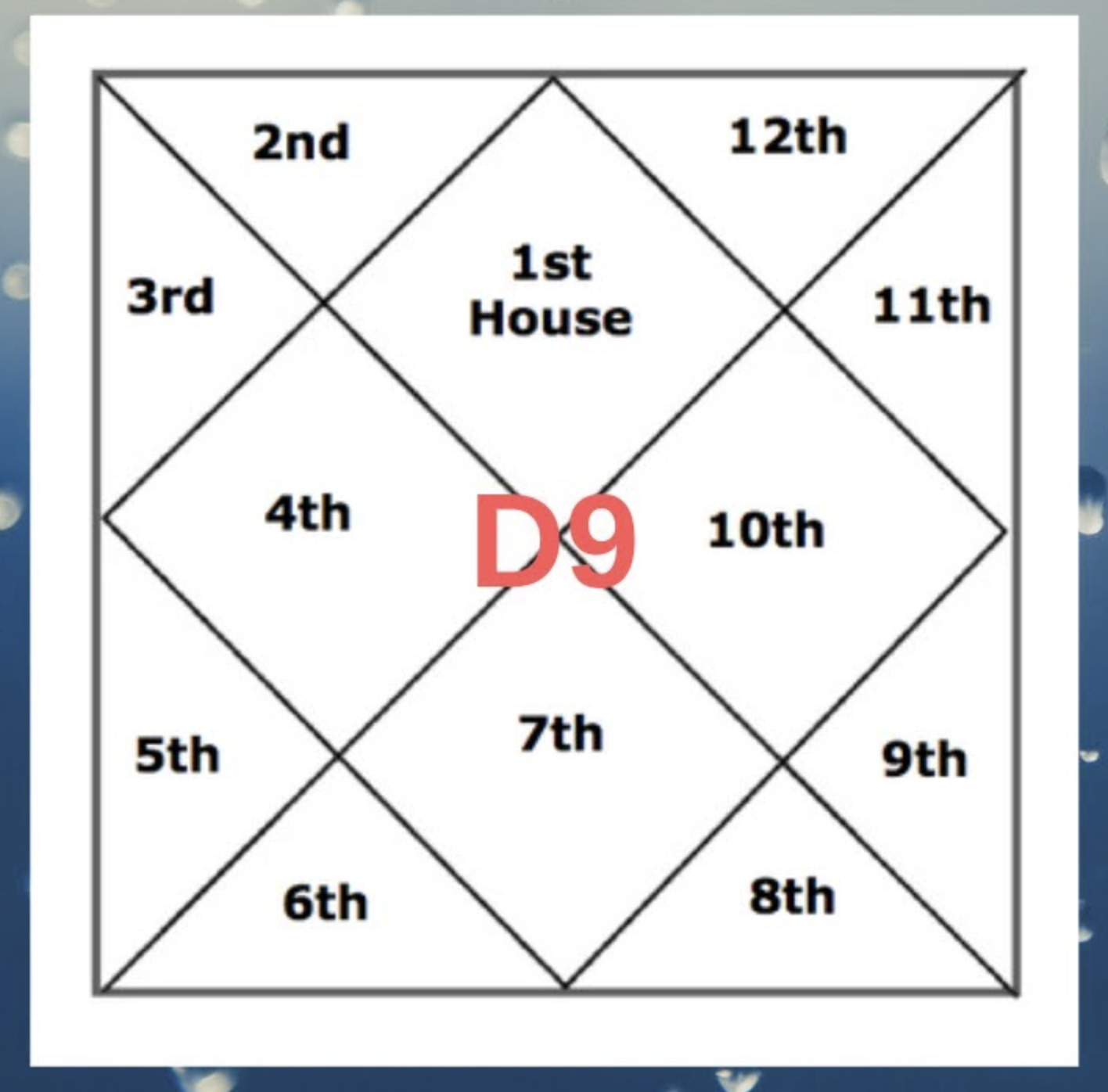
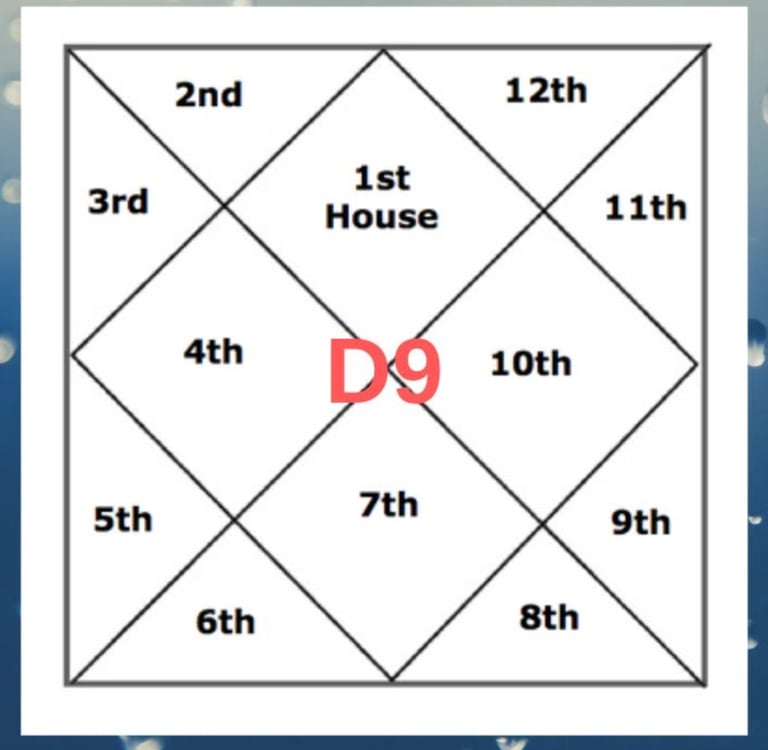
Navamsa (the D9 chart) is the 9th-division of each zodiac sign in Vedic astrology (Jyotisha), often called the Dharmamsa (part of dharma). It is constructed by dividing each 30° sign into 9 equal amsas of 3°20′ each (Aries 0–3°20′ = Aries navamsa, 3°20′–6°40′ = Taurus navamsa, etc.) and mapping these to the nine navamsa signs. The Navamsa is considered the “soul” of the Rashi(D1) chart. It refines the birth chart’s indications, especially on marriage, spouse, dharma (life-purpose), and planetary potency. In practice, astrologers compare D1 and D9 to assess planetary strength (Varga-bala, Shadbala), dignity (own/exaltation in navamsa), and household significances. Key predictors include the 7th‐lord in navamsa (spouse), Venus (wife or marital harmony), Jupiter (husband in a woman’s chart), and the Darakaraka (Jaimini’s spouse-signifier). Navamsa is also used in dashas (the Navamsa-Navadasha) and transits to time marriage or spiritual events.
Navamsa Construction and Varga Method
A Navamsa chart is created by subdividing each zodiac sign into nine equal parts (9×3°20′=30°). Each part (amsa) is assigned a sign in sequence. For example, Aries 0–3°20′ (the 1st amsa) is Aries navamsa, 3°20′–6°40′ (2nd) is Taurus navamsa, up to Sagittarius (9th). Taurus’s first amsa (0–3°20′) is Virgo, then Libra, etc. In total there are 108 navamsa segments (nine per sign), aligning with the 108 nakṣatra padas. (This Parasara Navamsa, or Dharmamsa, is the standard chart for marriage and dharma.) Navamsa highlights the soul’s dharma: it “maps to the 7th house of the zodiac” (relationships) more than the 9th house.
Navamsa vs Rashi (D1): Importance
The Navamsa modifies and deepens the Rashi chart. Classic sources call D9 the soul of the birth chart. The D1 chart (Rashi) shows the raw personality and life blueprint, whereas D9 reveals latent potential and life-purpose (dharma). For example, a planet that is exalted or in its own sign in navamsa gains extra Varga-bala (divisional strength) and yields stronger results. Conversely, a planet in a cruel (krura) or fallen navamsa loses efficacy. The houses in Navamsa “mean the same as in the main chart”, but can express differently: e.g. Navamsa 1st house relates to birth circumstances and inner nature, while Navamsa 4th is considered Khara (malefic, precarious) unlike D1’s 4th. Strong placement of D1’s house-lords in D9 (especially Lagna, 5th, 9th lords) portends well-being and longevity.
Navamsa Indicators: Marriage and Planets
Navamsa is famed for spouse/marriage analysis. Key factors: the D1 7th house lord’s position in D9 (good navamsa ⇒ favourable marriage), Venus’s navamsa (Venus is natural spouse-kyaraka for males), and Jupiter’s navamsa (Jupiter = husband for women charts). The Darakaraka (Jaimini’s spouse-significator, planet with lowest degree in D1) is also viewed in D9. Malefics or debilitated planets in the 7th or Venus/Jupiter navamsa suggest delays or difficulties. Generally, if 7th-lord or shubha grahas occupy Vargottama (same sign in D1 & D9) or exalted navamsa, marriage is strong. The Navamsa also refines parental/familial significations: e.g., Sun+Moon in one D9 house predicts multiple caretakers.
Beyond marriage, D9 informs overall fortune. “Dharma and Spiritual Growth” are gauged by navamsa (e.g. 9th-house navamsa), as past-life karma manifesting now. Astrologers often use D9 to check Varga-bala: a planet strong in both Rashi and Navamsa yields ‘full kala’ in Shadbala. For instance, a debilitated planet in D1 may “grow” if exalted in D9. Varāha Mihira notes that planets in Shubha or exalted navamsas (even Vargottama) give high success in that area, while Krura or debilitated navamsas diminish results.
Predictive Techniques with Navamsa
Astrologers reconcile D1 vs D9 by comparing placements: a lord well-placed in both charts promises stability, whereas mixed signals may indicate struggles. For timing, there is a Navamsa-Navadasha system (a 12-sign dasha on D9) for marriage or dharma events. Dashas of the D9 7th-house sign often trigger marital phases. Transits of benefics/malefics through important navamsa houses (especially D9 Lagna and 7th) are also considered in timing. Remedial measures may be guided by Navamsa: for example, strengthening a weak navamsa planet by mantra or puja of that deity.
Key Concepts
Amsha / Varga: “Amsha” means part (each 1/9 portion of a sign); “varga” refers to any divisional chart. Navamsa is the 9th-division (navamśa) of the Rashi.
Avastha: Planetary states (e.g. Bala, Naisargika) are often assessed in each chart; a planet’s avasthā in navamsa can differ from Rāśi.
Karaka: Natural significators (e.g. Venus for wife/marriage, Jupiter for husband/spirituality) guide D9 analysis. Darakaraka (Jyotish concept) is the D1 planet with least longitude.
Dignity: Own sign or exaltation in D9 adds Varga-bala. Being Vargottama (same sign in D1 & D9) greatly amplifies a planet’s power.
Yoga/Bhava changes: A planet may occupy a different house in D9. For example, an angle in D1 could fall in a trine in D9 (or vice versa), creating special yogas. Such changes are noted carefully; e.g. a D1 benefic becoming malefic by navamsa position signals complex effects. However, classical practice holds that planetary aspects are only applied in D1, not in D9.
Table: Rāśi (D1) vs Navamsa (D9) Interpretations
Theme/House or PlanetD1 MeaningD9 MeaningPredictive Use1st House (Self) Physical body, temperament, health, identity.Inner nature, soul’s constitution; also reflects early environment.If Lagna-lord strong in D9, stable identity and longevity. Joint D1-D9 patterns clarify destiny.7th House (Partnership)Spouse, marriage, business partners, open enemies.Spouse’s innate character & the quality of marriage life.7th-lord in benefic navamsa → happy marriage; malefic navamsa → delays, conflicts. Venus/Jupiter in D9 also key.9th House (Dharma)Luck, higher learning, father, dharma (righteousness).Deeper dharma, spiritual fortune, benefactor/father’s nature.Strong 9th-lord in D9 supports father’s longevity and spiritual growth. Yoga predictions (dharma yoga) often involve 9th-lord in D9.10th House (Career)Career, status, authority, public life.Vocation aligned with soul purpose; career achievements.Lord of 10th in D9 indicates career path (e.g. a strong Sun in D9 = authority in profession). D9 can confirm D10 findings.Venus (Love, Spouse)Love, comfort, arts, for men: wife; for women: material comforts.(For men:) Fortune in wife & marital harmony; (for women:) Husband’s characteristics; also auspiciousness of love life. Venus exalted/own sign in D9 gives blissful marriage; debilitated causes tension. (Ex: “Venus in its own navamsa” yields passion.) Jupiter (Wisdom, Guru)Wisdom, expansion, wealth, for women: husband.(For women:) Husband’s nature (Jupiter is Ardha-karaka for women); (for men:) spiritual path; also overall auspices.Jupiter in benefic navamsa => wise/happy husband (for women) or strong dharma. D9 placement of Jupiter indicates guru relationship.
Rasi Tulya Navamsa
Rasi Tulya Navamsa literally means “treat the Navamsa like a Rashi chart.”
In this approach, the Navamsa chart (D9) is read almost as an independent birth chart. You assign full importance to houses, signs, and planetary placements in D9 just like you would in D1.
What this means in practice:
The Navamsa Lagna is treated as a real ascendant.
Houses in D9 are interpreted directly (for example, 7th house for marriage, 10th for karma, etc.).
Planets in Navamsa are analyzed for their dignity, aspects, and conjunctions.
Yogas can also be studied within D9.
What it is used for:
Understanding marriage and spouse
Assessing inner strength and maturity of planets
Evaluating dharma and life direction
Seeing how life unfolds after maturity (usually after 30–35 years)
This method is especially useful when you want to go deeper into how a planet actually behaves beyond its surface promise in D1.
Navamsa Tulya Rashi
Navamsa Tulya Rashi means “project the Navamsa back onto the Rashi chart.”
Here, instead of treating D9 independently, you map Navamsa positions onto the birth chart (D1) to refine interpretation.
What this means in practice:
Take a planet’s Navamsa sign and treat it as an underlying influence in D1.
You reinterpret the planet in D1 using its D9 placement.
It acts like a hidden layer or true nature of the planet.
Example:
If Venus is in Taurus in D1 but in Scorpio in D9:
Outwardly (D1): Venus looks stable, sensual, grounded.
Internally (D9): Venus behaves intense, emotional, transformative.
So during its dasha, results may lean more toward the Navamsa nature, especially over time.
What it is used for:
Fine-tuning planetary results
Understanding real strength vs apparent strength
Judging how dashas will actually play out
Seeing inner motivations vs outer expression
Key Difference
Rasi Tulya Navamsa → Read D9 as a full chart on its own
Navamsa Tulya Rashi → Use D9 to modify and deepen D1 interpretation
How astrologers actually use both
In real predictive work, both are combined:
Start with D1 (Rashi chart) to see the promise
Check D9 (Navamsa) for strength and refinement
Use:
Rasi Tulya Navamsa → for independent insights (especially marriage, dharma)
Navamsa Tulya Rashi → to judge how planets will actually deliver results
Simple way to remember
D1 shows what is promised
D9 shows what is sustained and experienced
Together they show what actually happens